How to Control Diabetes Without Frequent Hospital Visits - A Practical Guide

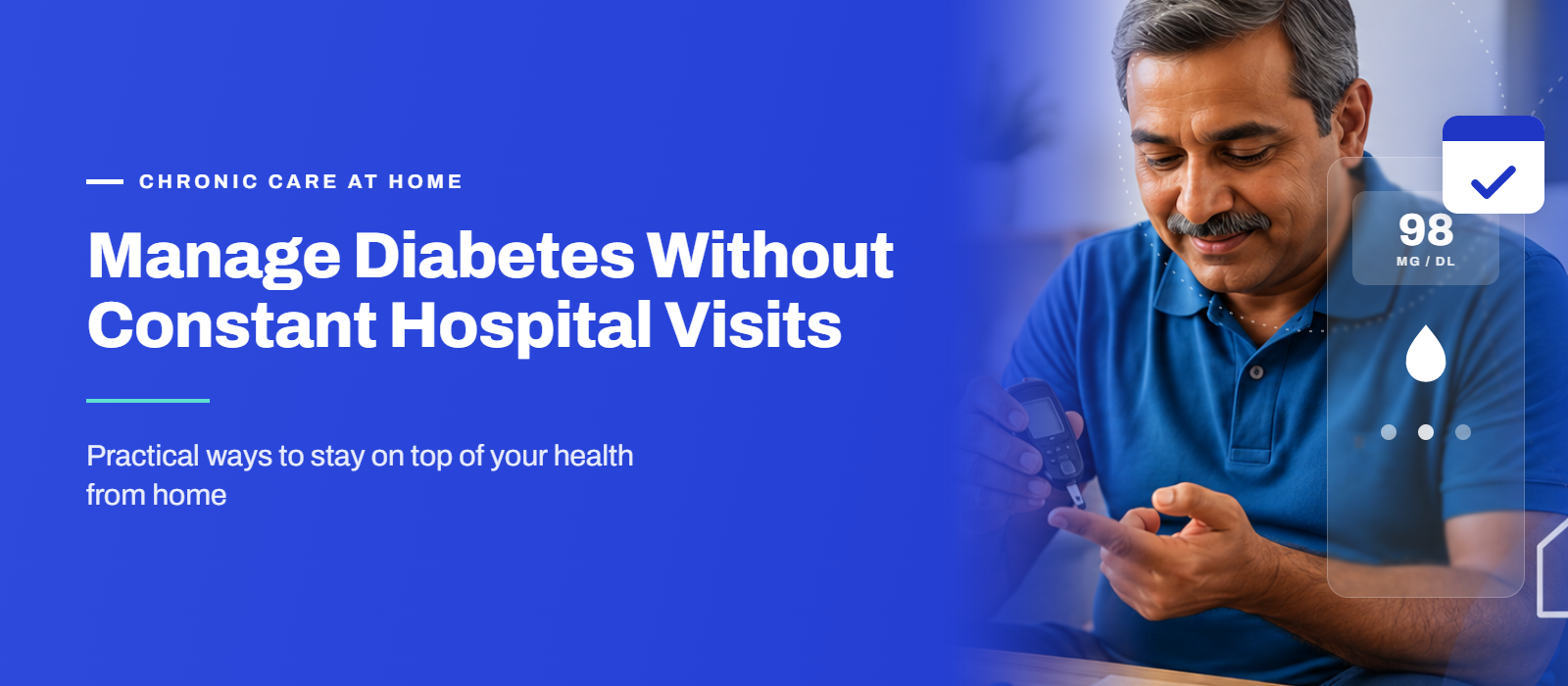
Most Indians with diabetes visit a hospital only when something goes wrong - not to prevent it. Yet managing diabetes well doesn't require sitting in a hospital waiting room every month. With the right home habits, digital tools, and access to online specialist consultations, millions of diabetic patients across India are now managing their condition effectively from home - and achieving better HbA1c results than those relying only on in-person visits.
This guide gives you a practical, doctor-aligned roadmap for diabetes management without frequent hospital visits.
The Diabetes Reality in India - Why Hospital-Only Care Is Failing Patients
India is home to over 101 million people living with diabetes - the second-highest number in the world. Yet most do not achieve their blood sugar targets. The reason isn't a lack of medicine. It's a broken system of care that makes regular monitoring difficult, expensive, and exhausting.
For patients in rural areas, the problem is especially acute. A follow-up consultation that should happen every 3 months requires half a day of travel, hours of waiting, and significant out-of-pocket expense - so most patients skip it, and their condition worsens quietly.
"The greatest risk for a diabetic patient is not the disease itself - it's the gap between consultations. That gap is where complications begin."
How to Control Diabetes Without Frequently Visiting Hospitals
The good news: modern diabetes management science supports a home-first approach. Most routine diabetes care - HbA1c tracking, medication review, diet counselling, lifestyle adjustments - can be done without stepping into a hospital. This guide shows you how.
Step 1: Master Home Blood Sugar Monitoring
The single most powerful thing a diabetic patient can do at home is check blood sugar regularly and record the numbers. This data is what your doctor uses to adjust your treatment - and with telehealth, you can now share it directly with a specialist online.
Home Monitoring Essentials
- Fasting blood glucose (FBG): Check first thing in the morning before eating. Target: 80-130 mg/dL for most adults with type 2 diabetes.
- Post-meal (postprandial) glucose: Check 2 hours after your first meal. Target: below 180 mg/dL.
- HbA1c test: Every 3 months. This shows your average blood sugar over 90 days. Most labs in India allow this without a prescription. Target: below 7% (or as advised by your doctor).
- Log every reading: Use a small notebook, the vcdoc app, or even a WhatsApp message to yourself. Patterns matter more than single readings.
- Check your feet weekly: Diabetic neuropathy begins silently. Look for cuts, discolouration, or numbness - especially on the soles.
Affordable glucometers are available at most Indian pharmacies for ₹500-₹1,500 (strips cost ₹5-₹10 each). Continuous glucose monitors (CGMs) are now available in India for ₹2,500-₹4,000/month and give readings every 5 minutes without finger-pricks - a major improvement for patients on insulin.
When to Consult a Doctor Immediately
Blood sugar above 300 mg/dL consistently, or below 60 mg/dL with symptoms like shaking, sweating, or confusion. These require urgent medical attention - call your doctor or use the vcdoc app for an emergency online consultation.
Book at vcdoc.inStep 2: The Diabetic Diet - What to Eat (and What to Skip)
Across India, diabetes diet advice is plagued by myths: "never eat rice again", "only eat bitter gourd," and "avoid all fruit".
A sustainable diabetic diet is about portions, timing, and food choices - not extreme restriction.
The key principle is glycaemic index (GI) - how quickly food raises blood sugar. Low-GI foods cause a slower, gentler rise. South Indian and Telugu cuisine already contains many naturally low-GI foods; the challenge is in how they are prepared and portioned.
✓ Eat Freely
- Green vegetables (palak, methi, beans)
- Cucumber, tomato, brinjal
- Dals and legumes (moong, chana)
- Small fish, egg whites
- Bitter gourd (karela)
- Curd (plain, unsweetened)
- Fenugreek seeds
⚡ Eat in Moderation
- Brown rice (1 small bowl/meal)
- Whole wheat roti (2/meal max)
- Oats, bajra, ragi
- Banana, mango (small portions)
- Low-fat milk
- Sweet potato
- Groundnuts (small handful)
✗ Limit or Avoid
- White rice in large portions
- Maida (white flour) products
- Sugary drinks, fruit juices
- Deep-fried snacks (murukku, pakoda)
- Biscuits, sweets, mithai
- White bread
- Alcohol (especially beer)
🕐 Timing Tips
- Eat at fixed times every day.
- Never skip breakfast.
- Eat 5-6 small meals vs 3 large.
- Don't eat within 2 hrs of bedtime.
- Drink water before meals.
- Start meals with vegetables.
Get a Personalised Diet Plan
A personalised diet plan for your specific HbA1c level, weight, kidney function, and medication is something only a doctor or diabetes educator can give you. An online diabetologist consultation on vcdoc can provide exactly this - without a hospital visit.
Book at vcdoc.inStep 3: Exercise as Medicine - The Right Plan
Exercise is one of the most powerful tools to lower blood sugar - it helps your cells use insulin more efficiently, reduces HbA1c by 0.5-1%, and lowers heart disease risk (the #1 killer of diabetic patients). You don't need a gym. You need consistency.
- Walk 30 minutes after meals: A 10-15-minute walk after breakfast, lunch, and dinner reduces post-meal blood sugar spikes significantly. This single habit is one of the most evidence-backed interventions in diabetes management.
- Strength training 2-3x per week: Bodyweight squats, wall push-ups, and resistance band exercises build muscle, and muscle is the largest tissue that absorbs blood glucose. Even 20 minutes twice a week matters.
- Yoga for blood sugar control: Specific asanas (Paschimottanasana, Bhujangasana, Mandukasana) have been shown in Indian studies to reduce fasting blood glucose. A 30-minute morning routine is a powerful addition to medication.
- Check blood sugar before and after exercise: If your blood sugar is below 100 mg/dL before exercising, have a small snack first. Exercise on very low sugar can cause hypoglycaemia - especially if you're on insulin or sulphonylureas.
- Start slowly if you've been inactive: Begin with 10-minute walks and increase gradually. Patients with diabetic neuropathy, retinopathy, or heart disease should get a doctor's clearance before starting any exercise programme - a quick online consultation on vcdoc can give you this guidance safely.
Step 4: Never Skip Medication - The Smart Way to Stay on Track
Studies show that over 17% of Indian diabetic patients are non-compliant with their medications. This is the single biggest driver of preventable complications - blindness, kidney failure, amputation, and heart attacks. The barrier is rarely cost; it's usually forgetfulness, side effects, or the belief that "my sugar is controlled, so I can skip today".
Common Medication Mistakes
- Skipping tablets when you feel fine
- Stopping insulin because sugar dropped once
- Taking a double dose to compensate for the missed one
- Changing timing based on meals without asking a doctor
- Using someone else's diabetes medication
Smart Medication Habits
- Take at the same time every day (link to a habit like brushing teeth)
- Keep a 2-week backup supply at home.
- Use a pill organiser or phone alarm.
- Report side effects to your doctor - don't stop medication silently.
- Review medication annually with a diabetologist - via online consult.
Insulin Patients: Special Guidance
If you are on insulin, do not adjust your dose yourself based on home readings without medical guidance. Insulin dose titration is one of the most common reasons for online diabetologist consultations - and it can be done safely and accurately via a 15-minute video call on vcdoc, without visiting a hospital.
Book at vcdoc.inStep 5: Stress, Sleep & Blood Sugar - The Hidden Connection
This is the most overlooked aspect of diabetes management in India. Stress hormones - cortisol and adrenaline - directly raise blood sugar levels. A patient who takes all their medication and eats well but lives under constant stress will still struggle with uncontrolled HbA1c.
Stress & Sleep Strategies That Lower Blood Sugar
- Sleep 7-8 hours per night: Poor sleep raises cortisol and insulin resistance. Even one night of bad sleep can elevate fasting glucose the next morning.
- Pranayama (deep breathing) for 10 minutes daily: Anulom-vilom and Bhramari breathing reduce cortisol and have shown measurable blood sugar benefits in Indian studies.
- Limit news and screen time before bed: Mental stimulation keeps cortisol elevated. A cool, dark room and no screen for 30 minutes before sleep dramatically improves sleep quality.
- Address anxiety and depression: Diabetic patients have 2-3x higher rates of depression, which in turn worsens diabetes control. If you feel persistently sad, anxious, or hopeless, speak to a doctor. An online psychiatry consultation on vcdoc is available, private, and covered under the platform's telehealth services.
Step 6: How Online Doctor Consultations Replace Most Hospital Visits
The most significant advancement for diabetes patients in India in the last decade is not a new drug - it is telemedicine. A meta-analysis of 19 studies published in 2025 confirmed that telehealth interventions reduced HbA1c by 0.18-0.64% compared to traditional care. For a patient with an HbA1c of 8.5%, that can be the difference between being at target and avoiding major complications. vcdoc brings verified specialists - diabetologists, endocrinologists, cardiologists - to your phone screen.
What Can Be Done in an Online Diabetes Consultation?
- HbA1c and blood sugar review: Upload your home readings or recent lab reports. Your doctor reviews them live and adjusts your treatment plan.
- Medication adjustment: Dose changes, switching from tablets to insulin, or reviewing oral hypoglycaemic combinations - all can be done via video call.
- Diet and lifestyle counselling: Personalised guidance based on your reports, weight, and lifestyle - tailored for the South Indian diet.
- Prescription renewal: Under India's Telemedicine Practice Guidelines (MoHFW, 2020), a registered doctor can renew prescriptions for chronic conditions like diabetes via telemedicine.
- Annual complication screening referrals: Your online doctor can review your history and refer you to eye, kidney, and nerve tests at appropriate intervals - removing the guesswork.
Keep Everything in One Place
Every reading, prescription, and consultation note is saved to your vcdoc Electronic Health Record (EHR) - so your diabetologist always has full context, even on a first visit.
View Your Electronic Health RecordWhen You Still Need to Go to the Hospital
Online-first does not mean online-always. There are situations where in-person care is essential - and recognising them is part of being a well-managed diabetic patient.
- Blood sugar above 300 mg/dL with nausea, vomiting, or confusion (possible DKA)
- Severe hypoglycaemia (blood sugar below 60 mg/dL) that doesn't improve with sugar intake
- Chest pain, breathlessness, or sudden severe headache (cardiac emergency)
- A wound on your foot that is not healing, is red, or has discharge
- Sudden vision loss or blurred vision
- Signs of infection: fever above 38.5°C with high blood sugar
Managing Diabetes Is Easier With the Right Doctor by Your Side
Get personalised guidance from a verified diabetologist or endocrinologist - no travel, no waiting room, no queue. Upload your reports, discuss your readings, and walk away with a clear plan.
Consult a Diabetologist on vcdoc
Consult a verified diabetologist or endocrinologist via the vcdoc app. Share your reports, get personalised guidance, and receive a prescription - without leaving your home.
Book at vcdoc.inFrequently Asked Questions
Q1: Can diabetes really be managed without visiting a hospital regularly?
A: Yes - for most type 2 diabetic patients with a stable condition, the majority of ongoing care does not require in-person hospital visits. Home blood glucose monitoring, consistent medication, a low-GI diet, and regular online consultations with a diabetologist (every 3-4 months) can effectively manage diabetes. Clinical evidence from a 2025 meta-analysis shows telehealth interventions reduce HbA1c by 0.18-0.64% versus standard care. Annual in-person tests for complications (eye, kidney, nerve) are still recommended, but routine follow-ups can be done online.
Q2: What is a good HbA1c target for an Indian diabetic patient?
A: For most adults with type 2 diabetes in India, the recommended HbA1c target is below 7.0% (53 mmol/mol) according to the RSSDI (Research Society for the Study of Diabetes in India) guidelines. However, the target may be individualised - for elderly patients or those with heart disease, a slightly higher target of 7.5-8% may be safer to avoid hypoglycaemia. Your diabetologist will set a personalised target during your consultation. An HbA1c test can be done at any lab in India, typically for ₹300-₹600, without a prescription.
Q3: Which foods are best for controlling blood sugar?
A: South Indian cuisine has several naturally diabetes-friendly options. Best choices include: ragi (finger millet) - one of the lowest-GI grains; koozh (fermented rice porridge), which has a lower GI than plain white rice; sambar with a variety of vegetables; boiled or steamed preparations over fried; bitter gourd (karela/pavakkai), which has demonstrated blood-glucose-lowering properties; and all leafy greens. The key modifications for South Indian patients are reducing white rice portion size (replace half with vegetables or dals), avoiding morning tiffins made with maida (like dosa from refined flour), and limiting coconut chutney quantity. A personalised diet consultation with a vcdoc dietitian or diabetologist can give you an Andhra Pradesh-specific meal plan.
Q4: How does vcdoc help diabetic patients?
A: vcdoc is an Indian telehealth platform that enables patients to access online consultations with certified and verified doctors from the comfort of their homes. Patients can connect with experienced healthcare professionals for diabetes management, chronic care support, follow-up consultations, prescription guidance, and medical advice through secure video or chat consultations. In particular, vcdoc supports patients in Andhra Pradesh and Telangana through its partnership with PSIMS (Dr. Pinnamaneni Siddhartha Institute of Medical Sciences, Vijayawada). Through this collaboration, patients can consult PSIMS-affiliated diabetologists, endocrinologists, and chronic care specialists online. Users can upload blood reports and glucose logs, receive digital prescriptions, and schedule follow-up appointments without visiting a hospital. Consultations are available in both Telugu and English.
Q5: How often should a diabetic patient consult a doctor remotely?
A: The recommended schedule for a stable type 2 diabetic patient managed via telehealth is: HbA1c check and online diabetologist review every 3 months; blood pressure and weight check monthly (can be done at any pharmacy); annual review for kidney function (urine microalbumin, serum creatinine), lipid profile, and liver function; annual eye examination (dilated fundus exam) in-person at an ophthalmology clinic; and annual foot examination. If your blood sugar is well-controlled (HbA1c under 7%) and stable, your doctor may extend reviews every 6 months. Patients on insulin may need more frequent consultations during dose adjustment periods.

